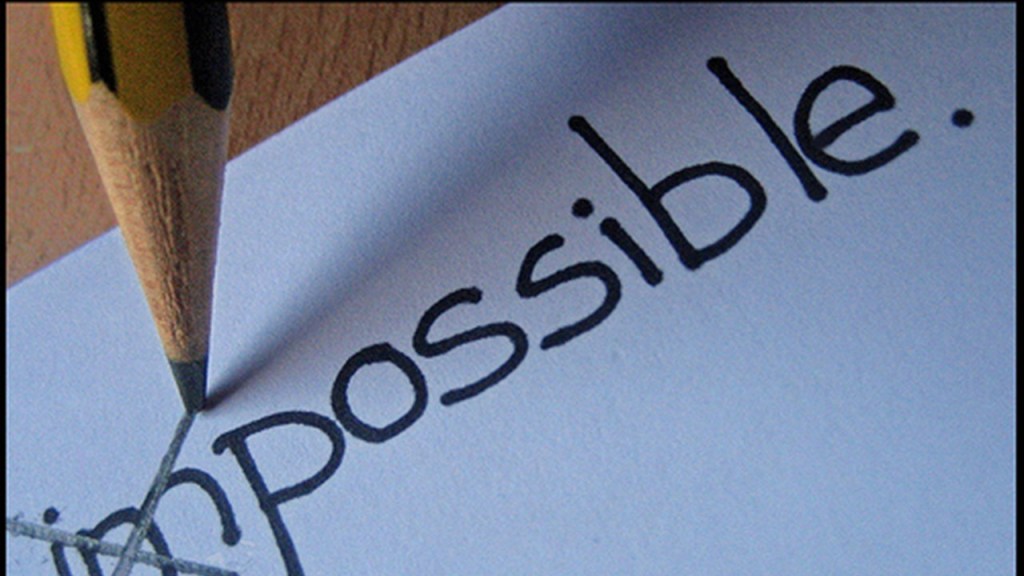
I hope that the questions in the past posts have allowed you to reflect on your life journey and given you some new insights. On to the next question!
What was something that seemed impossible – but you did it anyway?
For most of us, we’ve had times in our life where we faced the decision to move forward with something we didn’t think we were capable of or thought would be an uphill battle to reach the finish line. At that moment, we could have decided that it was ok not to move in that direction. We had every right to do so. Instead we chose to slay the dragon, overcome the giant – whatever you want to call it – and do what it took to achieve that goal.
I recall a few of these moments. Some changed my perspective. Others taught me the importance of perseverance and resilience. Not all were major events. One instance was making a simple choice to stop eating food after 9 p.m. I had a habit of wanting just one more snack before bed, which is not a healthy practice. As I’ve been exploring ways to make better choices and lose weight, I saw repeatedly that late night eating has a significant impact on our metabolism. I made the decision to put this into practice at the first of the year. I was sure I’d cave and convince myself that I needed just one more thing to eat, and that hunger pangs would constantly taunt me. Even still, I put reminders on my phone and made a conscious effort to make 9 p.m. the cutoff point. I’m happy to share that I have only had one moment where I ate something past that time and overall have not had any major cravings. While it was a small decision, I know it will have positive effects on my overall health goals.
Another example is on a professional level. Recently, I needed to support the design of a microlearning course to address a learning gap. While I am skilled to lead an amazing team that produces quality training courses, I will be the first to admit that I am not a rockstar instructional designer. At the same time, I can create simple courses and navigate through key instructional design tools. I was nervous to take on this project but knew it was necessary to help reduce the errors that our core audience was making in a particular area. The pre-work was the easier part, identifying the objectives and creating the storyboard and script for the lesson. Once I completed that and received approval from stakeholders and subject matter experts, I started the challenging part for me – using the design software. It was a combination of Vyond and Adobe Captivate, two tools that I was familiar with. I consider myself to be between an advanced beginner and competent user, having created videos in the past. I began putting the work together then asked my employee, who uses the tool regularly, for guidance on complex tasks. He was happy to help and gave honest feedback that helped me make key revisions and learn new ways to use Vyond. This led to a successfully designed course that was published on training site for our learning audience to access.
These two examples helped strengthen my leadership skills. How? First, making healthier choices brings me the energy I need to lead. If I’m fatigued or am dealing with health conditions that take me away from work, I risk not being an effective leader. In the second example, I was willing to jump in and ask for help to ensure I was supporting the needs of our team. Leaders should not be afraid to ask others, including their own team members, for their expertise to help them with decisions or key tasks. Your employees can be critical resources that help you build stronger teams. With that in mind, there’s no shame in leaders to ask their employees for support. What are things that seemed impossible for you, but you moved forward in completing the task or goal? Share in the comments!

 The Secret Sauce