Embracing Change = Growth

The world hates change, yet it is the only thing that has brought progress. ~Charles Kettering

We’ve all faced it. Someone announces a change is going to happen for your team, division or even the entire organization. Or maybe through personal reflection you’ve realized that something needs to be different in your life. When we face change, it’s not always with the most positive of reactions. While the experience may have been difficult, I’m sure some of you are able to reflect on the changes and see the growth you’ve experienced because of the transition to something new.

When I moved to my current role over nine years ago, there were changes on multiple levels. I left a team where I had gained experience and knowledge. Now I was in a leadership position where I would learn new processes, build new relationships, and implement my own changes to the team’s operating structure. As I began asking questions and giving feedback on training projects, I received some resistance. I realized I needed to explain why I was asking the questions and build trust with those I would be working with. Once I made that shift, people were more receptive to my feedback and willing to partner with me on training initiatives. Not only did I experience changes overall by joining a new team, I learned that I also needed to change my approach as a leader.

A few years later, along with the rest of the world, tremendous change came as the pandemic hit and we had to make quick adjustments to daily living. For me that meant leading my team from home, making difficult decisions to ensure my family was supported while I was working, adjusting to mask wearing and social distancing, and even increasing virtual interactions with friends and family. For others it was working on the front lines, adjusting to wearing PPE on a regular basis, dealing with fear, figuring out how to stay connected to loved ones that were isolated, and wondering how we would come out of this. Reflecting on my experience during the pandemic, here are some things that I’ve learned:

  1. Curbside grocery pickups are a timesaver. I still take advantage of this option from time to time.
  2. It’s ok to take a break.
  3. Maintaining relationships is critical, even if you are an introvert.
  4. Some people are kind. Others are not. Either way, only we can control our decision to be kind.
  5. There’s always a way to support others.
  6. People are more creative than they know.

Most recently, I’ve begun exploring the use of AI in my role. I will be the first to admit my skepticism towards this technology. Would it really make a difference? Would it reduce the time it took to complete tasks I had grown to dislike because they slowed up the process? At the same time, I was hearing the benefits and possibilities to do things that I was not as skilled in with the support of AI. In other words, it would help me learn new things.

The company I work for has done an amazing job preparing us to increase the use of AI in our work lives. Through learning, job aids, and hands-on activities with the encouragement to experiment, they have offered numerous ways for employees to discover how AI can become a part of daily work. I began to take some classes and started practicing the art of prompting. I learned how AI could help make some of my email messages more concise, how to create a process map using CoPilot and Excel, and discovered analytics that are beginning to reveal key metrics related to the audience that my team supports training. I am still learning how to further refine prompts and use CoPilot throughout the Microsoft Office Suite. My willingness to give AI a chance is bringing positive change and new opportunities within my work. I know that AI is not perfect, and the human touch is still necessary to ensure anything I ask AI to create is accurate and reflects the goals and message we want to portray to our internal teams and external learners.

In all these times of change, I grew. Was it easy? Absolutely not. But when I took the time to step back and look at the bigger picture, I saw that I embraced the change in many ways and gained insights I will carry with me into the future. These lessons are ones that I often reflect on to remind me that despite it all, growth is still happening and there are things we are constantly learning.

Leaders – Embracing change and not running from it is the most critical thing you can do. Remember the people following you. If they see you avoiding the change, that may influence them to do the same. If they see you leading the way through change, and you remain honest and transparent through the process, it will help your entire team transition and come out on the other side of the change a stronger and more resilient group. How will you lead yourself and others through the next change that’s on the horizon? For those that have recently gone through a change, what have you learned through that experience? Please share in the comments below. I’d love to hear from you!

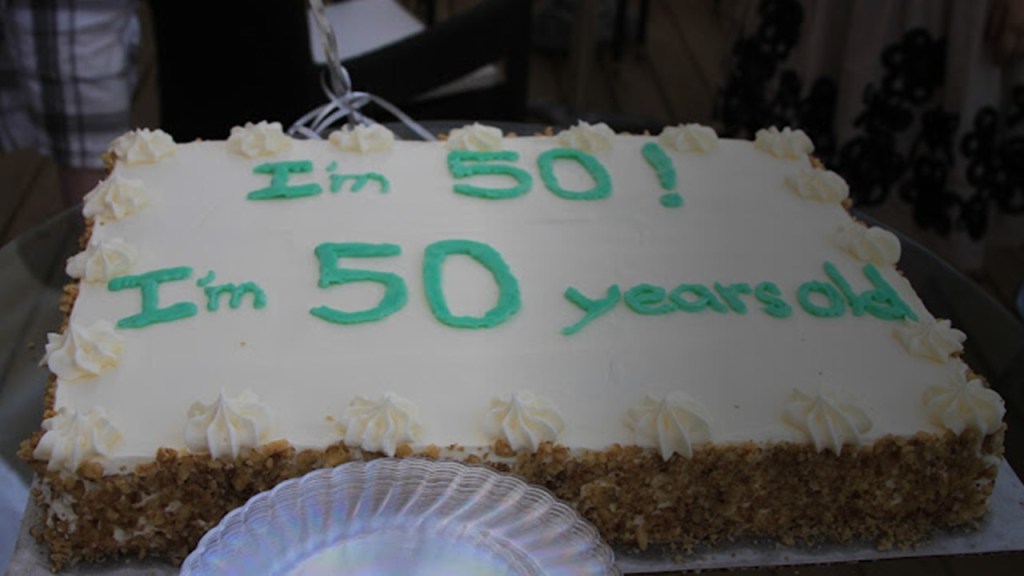
Turning 50 – reflecting on five decades part 3

I hope that you’ve enjoyed the last few posts that have reflected the decades of my life from a personal, professional, and historical perspective. This post will wrap up the overview of the last five decades of my life.  

2016-2025

Turning 40 was a pivotal point in my life from multiple perspectives. Desiigner’s “Panda” was the number one song on the radio (or satellite, or however else you listen to music). I would experience great joy with the birth of my son (it’s hard to believe that he will be nine in less than a month!) and great sorrow with the unexpected death of my husband. In this decade, we learned the words Brexit, SpaceX, and COVID-19.  Zoom meetings became the norm during quarantine, and we never expected to be stressed about having enough toilet paper at home. We also saw the emergence of A.I. which had been around for many years but now accelerated into the mainstream.

Leadership development introduced us to James Clear’s Atomic Habits that encouraged continuous improvement (yes, I highlighted this book in a past post), Bill Burnett and Dave Evans’ Designing Your Life challenging us to consider career maps and doing work with a purpose, and Kim Scott’s Radical Candor that helps leaders find the balance between giving direct feedback and having personal care for team members. Leaders during that time included U.S. Presidents Donald Trump and Joe Biden, Vladmir Putin in his second time leading Russia, France’s President Emmanuel Marcon, and Ukraine President Volodymyr Zelenskyy.

This most recent decade saw the strongest growth in my professional life. I earned my Master of Training and Development at Oakland University in December 2016, right at the end of my first trimester with my son. Not too long after his birth, I moved into a new role at work where I was an instructional designer and facilitator for sales support staff, starting to develop my instructional design skills. Almost two years later, I accepted a promotion to my current role leading a team that designs training for providers and staff that do business with our company. This experience has grown and stretched me as a leader, learning to build a team and develop relationships with co-workers and key stakeholders that foster collaboration and support for each of our training deliverables. It also taught me about leading teams in a virtual and hybrid environment, which was a factor in my interest to research organizational support for remote workers (You can learn more about that journey in a previous post).

If you remember my last post, I joined our company’s chapter of the National Management Association in the previous decade of my life. In this decade, I moved into roles that included an officer that oversaw the planning and hosting of our monthly meetings and two years as our chapter’s Board of Directors chairperson. Through the experience, I discovered an opportunity to become a National Director with NMA. This is a role that serves as a liaison between the national organization and the chapter you are assigned to. In 2023, I was sworn in as the National Director for my local chapter. Through my experience and involvement on board committees, I was nominated to become an officer on the board. In the fall of 2024, I was voted as the National Secretary and am now serving as the National Treasurer. It’s an honor to serve in these roles, and I look forward to future opportunities within the NMA board.  

2026

So here I am, starting the next decade of my life. It’s been about a month since I turned 50. The history is being laid out before me, and now I start to anticipate what the future holds. What will my career look like over the next 10 years? How will I grow as a leader? What knowledge will I have gained? How will my son grow up?

I don’t have these answers yet, and that’s completely ok. I look forward to this next path on my life journey and hope to have some amazing stories to share with you down the road as I continue this blog. Thank you for taking the time to learn about these five decades.

What were you most amazed about? How did it help you reflect on the decades of you life? I’d love to see your comments! PS – The number one song on my 50th Birthday was Olivia Rodrigo’s “Drop Dead.”

Turning 50 – reflecting on five decades part 2

5/18/26 – Turning 50 – reflecting on five decades part 2

In the last post I started sharing the first two decades of my life including historical moments, leadership and professional development happenings, and other highlights of life. This post continues the story, moving into the next two decades.

1996-2005

As I turned 20, we were a few years away from what the world thought was going to be a major global crisis: Y2K. We thought computers were going to freak out and the world was going to lose the ability to function due to our reliance on technology. Thankfully, it didn’t. Mariah Carey topped the charts that birthday with “Always Be My Baby”, Dolly the sheep emerged as the first cloned mammal, and the summer Olympics were just a few months away in Atlanta, Georgia. Email got its start with the launch of Hotmail (how many of you had an account?), Wikipedia (I still use this to look up information), and YouTube (one of my guilty pleasures!). This decade also brought tragedy with the U.S. Embassy bombings in Kenya and Tanzania, the bombing at the Olympic Park during the summer Olympics, the Space Shuttle Columbia disaster, Hurricane Katrina, the 9/11 attacks which brought the wars in Afghanistan and Iraq, and the deaths of Tupac Shakur and Princess Diana.

Leadership development during this time introduced many of us to the concept of emotional intelligence with books like Emotional Intelligence: Why it Can Matter More than IQ by Daniel Goleman. Spencer Johnson’s Who Moved My Cheese, the popular story that tells us how to adapt to change (there’s a kid’s version that I need to get for my son!), and Kerry Patterson et al.’s Crucial Conversations that guides leaders on how to effectively communicate to people in high stakes scenarios. Leaders during the decade included U.S. Presidents Bill Clinton and George W. Bush, UK Prime Minister Tony Blair, and Vladimir Putin in his first time of serving as the President of Russia. During these years, I continued to develop as a leader through my time as a youth group leader at a local church. That role brought valuable lessons about delegating and planning and discovering that youth ministry was not meant for me. It was also in these years that a few call center jobs laid the foundation that sparked my interest in training.

2006-2015

When I turned 30, Daniel Powter’s “Bad Day,” which became the elimination song on American Idol that year, was the number one song on the radio. This decade of my life brought the beginnings of Twitter (now X, though I still remember how we used to “tweet”), the first iPhone (now at version 17!), and the creation of Bitcoin (I had no idea that this even existed back then!). We were not without hard times with the “Great Recession,” the BP Deep Horizon oil spill, the Boston Marathon bombing, and a tsunami in Japan. I got married in this decade and decided to further my education through the Master of Training and Development program at Oakland University. While studying, I made great connections and friendships with many I still  keep in touch with. One is now a colleague of mine where I work, and another ended up becoming my realtor.

Leadership development during this time brought Susan Cain’s Quiet: The Power of Introverts in a World That Can’t Stop Talking (I recently read this book and as a fellow introvert resonated with many of the themes she shared), Charles Duhigg’s The Power of Habit, Sheryl Sandberg’s Lean In, and Brene’ Brown’s Daring Greatly. These books challenged readers to better understand the value of introverted leaders, consider the science to help us make good habits and break the ones that hold us back, encourage women to continue pursuing leadership, and that it’s ok vulnerable. Leaders during that time included U.S. Presidents George W. Bush as continued his first term and served a second, Barack Obama as the first African American President, and Angela Merkel as the Chancellor of Germany notably leading the largest European economy through the financial crisis of 2008.

During these years I officially started my career in learning and development, moving into a trainer role at the call center I was working at. It was there that I discovered the ADDIE model for developing training and gained support and insights from other professionals that eventually led to me working for the company I’m still at today. The MTD program I previously mentioned included classes that taught me about developing teams, submitting requests for proposals, various leadership styles, and the principles of instructional design. I served on my first board, supporting a professional group tied to our grad school program and helped planned meetings and events for students to gain additional education and networking opportunities in the learning and development field. I also joined my company’s chapter of the National Management Association, first attending meetings then moving on to write articles for our newsletter and chairing a committee. Little did I know then where that would take me in the next decade of my life.   

Next time, I’ll share the last part of my five decades on earth with more history and experiences. What memories do you have from these ten years? How did you grow professionally during this time? I’d love to hear about it!

Turning 50 – reflecting on five decades part 1

Yesterday, I hit a major milestone. I’ve now been on this earth for five decades. Looking back as I’ve approached this date, so much has happened that brings different kinds of memories. For the next several posts, I have decided to share what has happened in the world from a history and leadership perspective in the last 50 years as well as insights from my own life and development journey. To start, I’ll share about the first twenty years.

1976-1985

I was born the year of America’s bicentennial, so that was big news in the months following my birth. The number one song the day I was born was “Welcome Back” by John Sebastian. Fondly remembered as the theme to Welcome Back, Kotter, it was still too early to know the extent of fame that John Travolta would see in his acting career. The nation was 200 years in, with technology advancing and political conflicts continuing. Those first 10 years of my life saw me living in two cities and attending two different elementary schools. I made my first communion, learned to love reading and some math, and enjoyed many great trips with family. That time also saw the start of Apple, continued Cold War tensions that included the Soviets invading Afghanistan, advancements in space exploration with Columbia launching as the first reusable shuttle, the start of MTV (I miss the 24/7 videos), and efforts like Live Aid where musicians led the way to raise awareness and money to help countries struggling with famine.

From a leadership development perspective, some of the most popular professional focused books in that decade included James Macgregor Burns’ Leadership, which highlighted transactional and transformational leadership and The One Minute Manager, Ken Blanchard and Spencer Johnson’s very popular book that shared techniques to boost productivity and empower employees. Leaders during that decade included three U.S. Presidents – Ford, Carter, and Reagan; four Soviet leaders including Leonoid Brezhnev and Mikhail Gorbachev; and the beginning of Margaret Thatcher’s 11-year journey as the first female Prime Minister of the UK. I really didn’t have any specific leadership opportunities that I recall from that young age, but they would certainly emerge as I started the next decade of my life.

1986-1995

When I turned 10, we were getting closer to the end of the Cold War. Robert Palmer’s “Addicted to Love” was the number one song on the radio, and Top Gun was the top grossing movie of 1986. The time went by quickly as I grew to love music and was involved in band, choir, and theatre during many of those years. I went on some amazing band trips which included Saint Louis, Virginia Beach, and Chicago. I sang in multiple choir concerts and competitions and had a role behind the scenes or on stage for two plays and three musicals. I also managed to visit Washington, D.C. three times in that decade. First for our eighth-grade trip, two years later on a band trip, and two years after that at a high school journalism conference. I graduated from high school during this decade of life and started my first year of college. While I did not fare well my freshman year, I gained some valuable lessons that took me to an improved academic experience at other schools in future years. Two tragedies marked the beginning of this decade with the Challenger explosion and the Chernobyl incident. There was also the controversial discovery that became known as the Iran-Contra Affair. The second decade of my life saw the fall of the Berlin Wall along with the reunification of Germany and the end of the USSR, the launch of the World Wide Web, the Gulf War, the Oklahoma City bombing, the O.J. car chase and trial, the rise of grunge music, the death of Kurt Cobain, and the beginnings of the Foo Fighters (some of you knew I was going to find a way to mention them!).

While I was navigating all levels of school from elementary to my first year of college, there was a lot of buzz from a leadership development perspective. Mentioned in my last post, The 7 Habits of Highly Effective People (which I now own thanks to a friend’s generous birthday gift!) was published within those ten years along with Tony Robbins’ Awaken the Giant Within and Unlimited Power which center on controlling thoughts and emotions as well as developing peak performance. Leaders during that decade included Reagan and two more U.S. Presidents – George H.W. Bush and Bill Clinton; the end of Mikhail Gorbachev’s leading of Russia followed by Boris Yeltsin; and the conclusion of Margaret Thatcher’s role as Prime Minister followed by John Major. In the second half of this decade, I began to find ways to lead. I oversaw our high school band uniform coordination, making sure inventory was updated and that each band member had the right sizes and pieces for marching band. I also had the chance to coordinate volunteers for our school’s blood drive, a small thing that helped lay the foundation for another volunteer leader opportunity later in life.  

I will continue the decades in my next post as I reflect on these past 50 years both personally, professionally, and historically. What are things you recall that shaped you over the decades of your life? I’d love to learn about them! Feel free to share in the comments.

Habits – make them or break them!

It’s time for another question! This time, the focus is on habits.

What habit, if you did it more consistently, would have a positive effect on your life?

Habits are something that we hear about all the time. There are articles and advice everywhere about the importance of developing good habits as well as how to stop following bad habits. James Clear, author of Atomic Habits, emphasizes the importance of incremental methods to establish positive habits and remove negative ones. Charles Duhigg, author of The Power of Habit, shares research and stories of why habits even exist and how this knowledge will make a difference in what we do.

For me, there are habits that already have a positive effect on my life. One that I’ve shared before is keeping journals. The gratitude journal as some of you know is one where every night before bed, I write down five successes and three things I am thankful for from that day. I do my best not to repeat, but at times it does happen as it may be something that’s tied to a specific goal. I also have a second journal, One Question a Day: A Five-Year Journal, that allows me to answer questions each night and see if the answer changes year over year. Some questions are annually focused such as “What goal would you like to accomplish this year?”, while others may stay the same such as “What is your favorite restaurant?” I’ve had this journal just over two years and enjoy looking at past entries to see what answers have changed and which are identical. The habit of journalling has helped me keep a positive perspective, even on the hardest days, and take time to reflect on where I’m at in the moment.

Looking at habits that I would like to establish as a leader that have a positive effect tie back to Franklin Covey’s 7 Habits of Highly Effective People. First, I have realized that I need to read this book as it includes critical areas that will bring improvement to my personal and professional life. Reviewing the summary of the habits, I see where I demonstrate elements of each. At the same time, I would like to cultivate some areas to bring further growth. This includes using more proactive language, a deeper review of how I manage my time, and becoming more of an empathic listener. These can bring a positive and supportive approach to those you lead and help focus on the important things that help teams be successful in their purpose.

Habits are a way of life that we continue to make, break, and maintain throughout the years. They can help expand your horizons, make you healthier, or go in the opposite direction and set you back in your goals. Take some time to reflect and ask yourself:

  • Which habits are serving me well that I should maintain or cultivate?
  • Which habits are holding me back from my personal and professional goals? What is needed to break these habits?
  • Which habits do I want to form to help me grow personally and professionally?

What did you discover? Share in the comments!